

Soothing vs Strengthening the Gut
Kate TaylorAn evidence-based guide to understanding how different foods and herbs support digestive function
Your gut doesn’t always need the same kind of support.
Some days it benefits from soothing, gentle nourishment that helps calm irritation.
Other days (and most days), it benefits from strengthening — slow, steady inputs that support the microbiome, gut lining and long-term digestive resilience.
A simple way to think about it:
- Soothing = comfort and calm, used daily or when the gut feels sensitive.
- Strengthening = consistency and resilience, built gradually over time.
Both play different roles. And both matter.

1. What It Means to Soothe the Gut
“Soothing” support focuses on comfort — helping the digestive system feel calmer, less reactive and more settled.
People often benefit from soothing strategies when feeling bloated, crampy, stressed, inflamed, or after heavy meals.
Below are the key soothing ingredients, now with APA-style in-text citations.
Chamomile (Matricaria chamomilla)

Chamomile contains terpenoids and flavonoids with calming, anti-inflammatory and antispasmodic properties (McKay et al., 2022; Sharifi-Rad et al., 2019; Srivastava et al., 2010).
These actions help explain its traditional use for digestive comfort.
Marshmallow Root (Althaea officinalis)
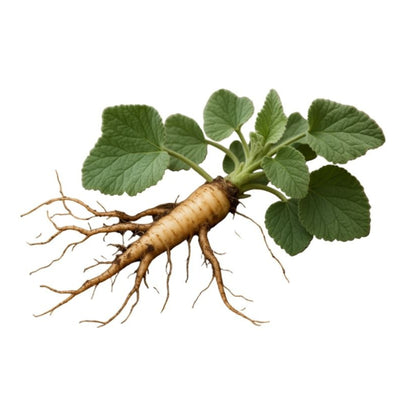
Marshmallow root is rich in mucilage — gel-like polysaccharides that coat and soothe mucosal tissues.
Caco-2 cell studies show marshmallow-containing formulations help support tight junction integrity and barrier function (Chantarasataporn et al., 2023; Sriariyanun et al., 2023).
Calendula (Calendula officinalis)

Calendula provides carotenoids, flavonoids, and fibre that may support tissue comfort and digestive regularity.
Research on edible flowers identifies calendula as a notable source of bioactive compounds and fibre relevant to gut health (Milewska et al., 2022).
Licorice Root (Glycyrrhiza spp.)
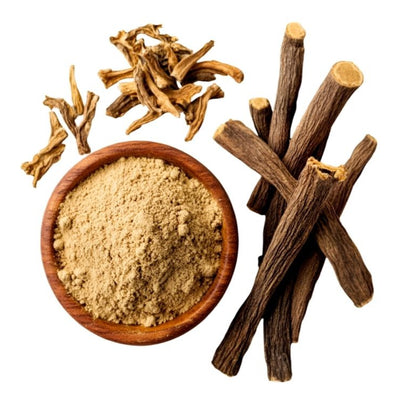
Licorice contains glycyrrhizin and flavonoids studied for anti-inflammatory and antimicrobial properties.
Research suggests licorice compounds may influence immune pathways and microbial behaviour relevant to digestive comfort (Liu et al., 2022; Saei et al., 2025).
What Soothing Ingredients Support
- mild digestive discomfort
- bloating or cramping
- sensitivity during stress
- mucosal comfort
- gut–brain regulation
- comfort after heavy meals
Soothing strategies offer gentle, immediate support when the gut needs calming.
2. What It Means to Strengthen the Gut
Strengthening the gut is about long-term nourishment — supporting microbial diversity, gut barrier integrity, and digestive consistency.
This isn’t quick relief.
It’s built through small, daily actions, similar to gradually developing strength through training.
Below are the primary strengthening ingredients with APA in-text citations.
Prebiotic Fibre
Prebiotic fibres — such as inulin-type fructans and resistant starch — selectively feed beneficial bacteria.
A detailed review shows prebiotic fibres increase short-chain fatty acids (SCFAs), support regularity, and enhance microbial diversity (Slavin, 2013).
Polyphenol-Rich Foods
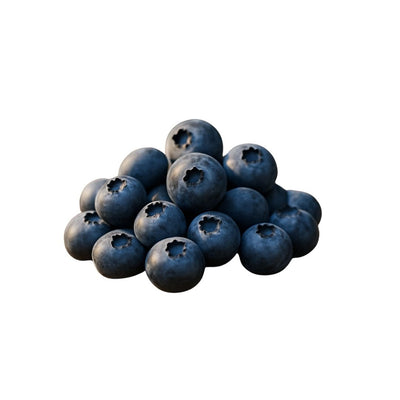
Polyphenols from berries, spices, herbs and cocoa interact with gut bacteria and support metabolic processes.
Studies demonstrate that polyphenols modulate microbial composition and influence SCFA production (Cardona et al., 2013; Ameer et al., 2023).
L-Glutamine
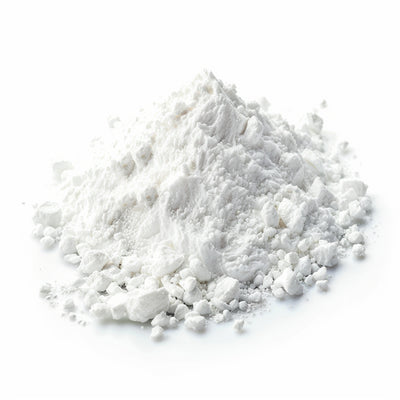
Glutamine is a key fuel source for intestinal cells and is often discussed in relation to barrier function.
Reviews show glutamine supports tight junction integrity (De Marco et al., 2015), and clinical trials demonstrate improvements in gut symptoms and biomarkers when used with dietary interventions (Barbaro et al., 2021).
Papaya (Carica papaya)
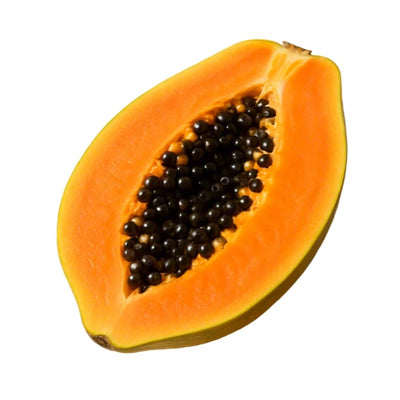
Papaya contains proteolytic enzymes that support digestion and may influence microbial composition.
Studies highlight enhanced digestive capacity, effects on the microbiota, and altered mucosal permeability (Kansci et al., 2021; Zhang et al., 2022).
What Strengthening Ingredients Support
- digestive consistency
- regularity
- microbial resilience
- SCFA production
- barrier integrity
- long-term digestive comfort
Strengthening creates a stable foundation that keeps digestion functioning well.
3. When to Use Soothing vs Strengthening
Use soothing when:
- you're bloated, crampy or inflamed
- stress is affecting digestion
- meals feel heavy
- your gut feels reactive
- you want gentle daily comfort
Explore our Sensitive Gut Support Gut Health Blend which contains these active ingredients.
Use strengthening when:
- you want balanced digestion over time
- you're supporting your microbiome
- your fibre intake is lower
- you’re working on gut barrier support
- you want consistent digestive function
Explore our Bloating Support Gut Health Blend which contains these active ingredients.
Most people benefit from both.
4. Integrating Both Approaches Into Daily Life
Soothing Strategies (Daily or As Needed)
- chamomile, calendula, licorice or marshmallow preparations
- warm, easily digestible meals
- slow, mindful eating
- reducing very rich foods on reactive days
Strengthening Strategies (Consistently Over Time)
- lots of vegetables, legumes and whole plant foods
- daily polyphenol-rich foods (berries, spices, herbs, teas, cocoa)
- steady hydration
- balanced meals
- prebiotic fibre supplementation, where appropriate
- L-glutamine supplementation, where appropriate, for barrier support
Strengthening comes from consistency, not intensity — small habits repeated daily. These ingredients can be found in our Gut Health Blends.
References
Ameer, K., Bae, S.-W., & Park, J.-Y. (2023). Polyphenols and their influence on cardiometabolic health: A comprehensive review. Atherosclerosis, 370, 47–58.
https://www.sciencedirect.com/science/article/pii/S0002916522039144
Barbaro, M. R., Stanghellini, V., Cremon, C., et al. (2021). Glutamine supplementation enhances the effects of a low FODMAP diet in improving symptoms and biomarkers in patients with IBS. Frontiers in Nutrition, 8, 746703.
https://www.frontiersin.org/journals/nutrition/articles/10.3389/fnut.2021.746703/full
Cardona, F., Andrés-Lacueva, C., Tulipani, S., Tinahones, F. J., & Queipo-Ortuño, M. I. (2013). The gut microbiota and polyphenols: Mutual interactions. Journal of Agricultural and Food Chemistry, 61(40), 9517–9533.
https://pubs.acs.org/doi/10.1021/jf402506c
Chantarasataporn, P., Puttarat, N., & Hunsakunachai, N. (2023). Influences of yogurt with functional ingredients that help treat leaky gut on intestinal barrier dysfunction in Caco-2 cells. Pharmaceuticals, 16(11), 1511.
https://www.mdpi.com/1424-8247/16/11/1511
De Marco, V. G., Ma, L., Woods, C., & Whaley-Connell, A. (2015). Glutamine and intestinal barrier function. Amino Acids, 47, 2143–2154.
https://link.springer.com/article/10.1007/s00726-014-1773-4
Kansci, G., Aso, L., & Bernaert, H. (2021). Papain and bromelain: Physicochemical aspects and proteolytic properties. Food Chemistry, 344, 128730.
https://www.sciencedirect.com/science/article/abs/pii/S030881462100073X
Liu, W., Wang, S., & Xu, Y. (2022). Antimicrobial and immunomodulatory activities of glycyrrhizin and its derivatives. Microbiology Spectrum, 10(1), e02355-21.
https://journals.asm.org/doi/full/10.1128/spectrum.02355-21
McKay, D. L., Singh, A. P., Brunt, K., et al. (2022). A comprehensive review of chamomile (Matricaria chamomilla L.) and its therapeutic applications. Pharmaceuticals, 15(10), 1284.
https://www.mdpi.com/1424-8247/15/10/1284
Milewska, N., Reguła, J., & Jakubczyk, K. (2022). Edible flowers as a source of dietary fibre as a potential athlete’s dietary supplement. Nutrients, 14(12), 2470.
https://www.mdpi.com/2072-6643/14/12/2470
Saei, H., Choi, H., & Chen, C. (2025). The therapeutic potential of glycyrrhizin and related compounds. Biomedicine & Pharmacotherapy.
https://www.sciencedirect.com/science/article/abs/pii/S2212429225008879
Sharifi-Rad, J., Quispe, C., Herrera-Bravo, J., et al. (2019). Pharmacological activities of chamomile (Matricaria chamomilla L.). Pharmaceutical Biology, 57(1), 310–329.
https://www.tandfonline.com/doi/full/10.1080/14756366.2019.1681989
Slavin, J. (2013). Fiber and prebiotics: Mechanisms and health benefits. Nutrients, 5(4), 1417–1435.
https://www.mdpi.com/2072-6643/5/4/1417
Sriariyanun, M., Thamarath, V., & Watanesk, R. (2023). Attributes of culture bacteria as influenced by ingredients that help treat leaky gut. Microorganisms, 11(4), 893.
https://www.mdpi.com/2076-2607/11/4/893
Srivastava, J. K., Shankar, E., & Gupta, S. (2010). Chamomile: A herbal medicine of the past with bright future. Molecular Medicine Reports, 3(6), 895–901.
https://pubmed.ncbi.nlm.nih.gov/21132119/
Zhang, K., Ren, S., & Ma, Y. (2022). Effects of proteases from pineapple and papaya on protein digestive capacity, gut microbiota and mucosal permeability. Metabolites, 12(11), 1027.
https://www.mdpi.com/2218-1989/12/11/1027